GLOBAL PORT OPERATIONS JOURNAL / MARITIME LOGISTICS
Inside the Journey of a Shipping Container
Follow the coordinated process that moves cargo from an arriving container ship through cranes, storage yards, customs procedures, and onward transportation.
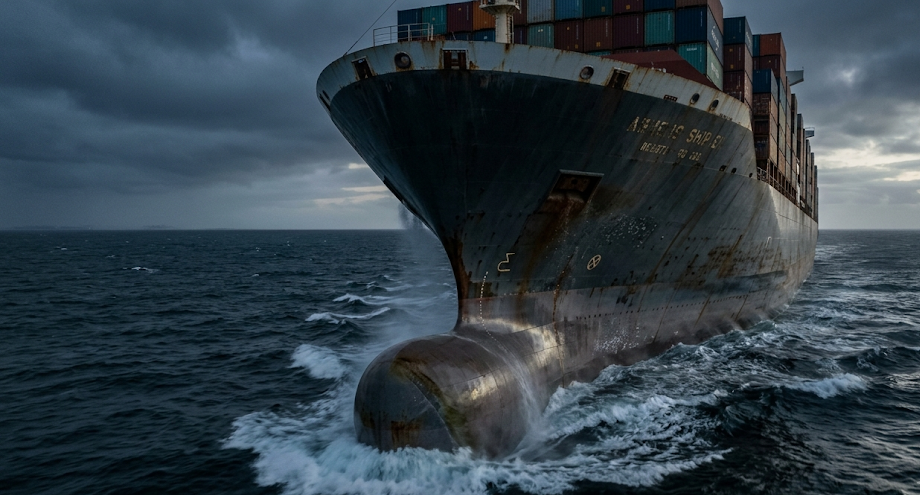
Every day, enormous container ships arrive at ports carrying goods that will eventually reach stores, factories, warehouses, and homes.
Their cargo may include clothing, electronics, machinery, furniture, automotive parts, food products, and industrial materials.
Although the containers appear simple, moving them through a busy port requires carefully coordinated operations.
A container cannot simply be lifted from a ship and driven away.
Before it leaves the terminal, the ship must reach an assigned berth, cranes must unload the cargo, terminal equipment must move containers into suitable areas, and required documentation and regulatory procedures must be completed.
Road trucks, freight trains, and sometimes inland waterways then carry containers toward their next destinations.
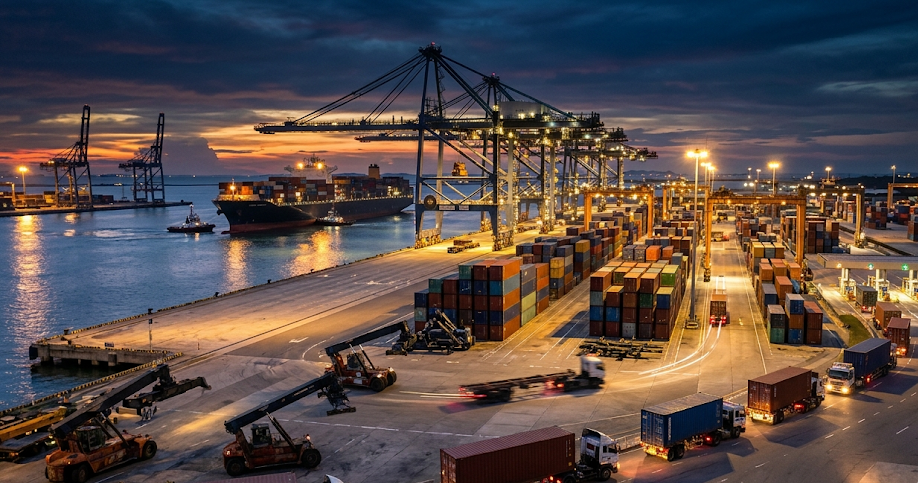
A modern container port is a transportation interchange where ships, cranes, digital systems, storage facilities, and inland transport networks work together.
Understanding this process helps explain how international trade moves efficiently across oceans and national borders.
What Is a Container Port?
A container port is a maritime facility designed to handle standardized freight containers moving between ships and inland transportation systems.
These containers are commonly transported by sea, rail, and road without unloading the individual goods inside at each transfer point.
This system is known as intermodal transportation.
Standard container dimensions allow compatible handling equipment to move cargo between different transport modes.
Two common container lengths are 20 feet and 40 feet.
Container capacity is frequently measured in twenty-foot equivalent units, or TEUs.
One standard 20-foot container represents one TEU, while a standard 40-foot container represents two TEUs.
Ports may contain several terminals, each operated by different companies or designed for different cargo types.
A container terminal is the specific area where containers are transferred, stored temporarily, and prepared for onward movement.
Step 1: Planning Before the Ship Arrives
Container port operations begin well before a vessel reaches the harbor.
Shipping lines and terminal operators exchange information about the ship’s expected arrival time, container load, and operational requirements.
Port planners consider berth availability, vessel size, water depth, crane capacity, and expected handling time.
Terminals also receive information about containers scheduled for unloading and loading.
This helps determine where equipment and workers will be needed.
Planning is important because large container ships can carry thousands of containers.
Without advance coordination, unloading and loading could create significant congestion.
Schedules may change because of weather, shipping delays, equipment availability, or conditions at other ports.
Terminal operators therefore update their plans as new information becomes available.
Step 2: Entering the Harbor and Reaching the Berth
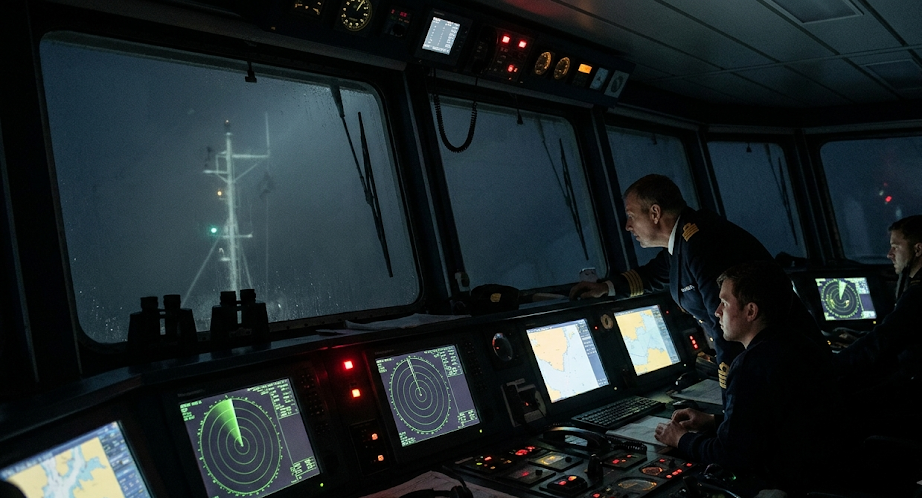
When a container ship approaches a port, it must navigate through designated waterways toward its assigned berth.
Many ports require a licensed marine pilot to assist with navigation in local waters.
The pilot brings detailed knowledge of harbor channels, currents, tides, and port procedures.
Tugboats may assist large ships during maneuvering, particularly in confined areas or difficult conditions.
Once the vessel reaches the berth, mooring lines secure it alongside the quay.
Port and terminal personnel complete the necessary operational checks before cargo handling begins.
The ship’s size, water depth, weather, and local regulations all influence how the arrival process is managed.
PORT OPERATIONS NOTE / BERTH PLANNING
A Berth Is More Than a Parking Space for a Ship.
It must provide suitable water depth, mooring arrangements, crane access, and safe working conditions. Efficient berth allocation helps reduce vessel waiting times and terminal congestion.
Step 3: Unloading Containers with Ship-to-Shore Cranes
Once the ship is secured and operations are authorized, large ship-to-shore container cranes begin unloading cargo.
These cranes are among the most recognizable structures in modern ports.
Their long booms extend over the vessel, allowing containers to be lifted from different positions on the ship.
A specialized lifting attachment called a spreader connects to standardized fittings on the container.
The crane lifts the container vertically, moves it toward the quay, and lowers it onto a waiting transport vehicle or designated transfer area.
Crane operations are carefully coordinated to maintain safety and productivity.
Depending on the terminal, cranes may be operated from cabins, remotely controlled, or supported by automated systems.
The number of cranes assigned to a ship depends on its size, cargo distribution, berth conditions, and terminal resources.
Step 4: Moving Containers Across the Terminal
After unloading, containers must travel from the quay to another location within the terminal.
This movement is handled by specialized terminal transport equipment.
Some ports use terminal tractors pulling container trailers.
Others use straddle carriers, automated guided vehicles, or different equipment configurations.
These vehicles transport containers between the cranes, storage yards, inspection areas, and inland transport connections.
The choice of equipment depends on terminal layout, operating scale, investment, and automation strategy.
Efficient internal transport is essential because delays at this stage can prevent cranes from maintaining their planned handling rates.
Terminal operators therefore coordinate vehicle movements to keep cargo flowing smoothly.
Step 5: Storing Containers in the Yard
Most containers do not leave the terminal immediately after unloading.
They are usually placed in a storage area known as the container yard.
Containers may be stacked in organized blocks according to operational requirements.
Terminal systems record each container’s location so it can be retrieved later.
Storage planning considers destination, expected pickup time, container size, weight, and special handling requirements.
Refrigerated containers, often called reefers, may require electrical connections to maintain controlled temperatures.
Containers carrying hazardous materials must be handled according to applicable safety and segregation requirements.
Oversized cargo may require separate arrangements.
Good yard planning reduces unnecessary container movements and helps prevent congestion.
The Main Equipment Used in Container Terminals
| Equipment | Main Function | Typical Location |
|---|---|---|
| Ship-to-shore crane | Transfers containers between ships and quay | Berth |
| Terminal tractor | Moves containers on trailers | Terminal roads |
| Straddle carrier | Transports and stacks containers | Container yard |
| Rubber-tyred gantry crane | Stacks and retrieves containers | Storage blocks |
| Rail-mounted gantry crane | Handles containers in fixed operating areas | Yards and rail terminals |
| Reach stacker | Lifts and moves containers | Storage and handling areas |
Step 6: Documentation and Customs Clearance
International cargo must comply with the customs and import requirements of the destination country.
Before a container can be released, the required declarations, documents, and approvals must be completed.
Depending on the shipment, documents may include commercial invoices, packing lists, transport documents, and customs declarations.
Customs authorities may review information about the goods, their origin, declared value, and applicable duties or taxes.
Some shipments are selected for inspection.
Inspection methods may include document reviews, scanning equipment, or physical examination of cargo.
Not every container is physically opened.
Customs procedures and release requirements vary by country and cargo type.
In the United States, import procedures involve U.S. Customs and Border Protection.
In the United Kingdom, relevant customs procedures are administered through HM Revenue & Customs and associated border systems.
Other government agencies may also regulate particular goods, including food, plants, animals, and hazardous products.
Step 7: Releasing Containers for Collection
Customs clearance is important, but it is not always the only requirement before a container can leave the terminal.
The shipping line, terminal operator, and cargo owner or their representatives may need to complete additional commercial and administrative procedures.
These can include confirming delivery authorization and settling applicable charges.
Once the required conditions are satisfied, the container becomes eligible for collection.
Terminal systems help coordinate the release process and communicate relevant information to transport operators.
At some ports, trucking companies must book appointments before entering the terminal.
Appointment systems help spread vehicle arrivals across available operating periods and reduce congestion.
Step 8: Loading Containers onto Trucks
Road transport is one of the main ways containers leave ports.
A truck arrives at the terminal according to local access procedures.
Its driver may pass through identification, security, and documentation checks.
The terminal system identifies the container scheduled for collection.
Handling equipment retrieves the container from its storage position and places it onto a suitable chassis or trailer.
The container is secured for road transport.
Before departure, the terminal may verify container details and record the movement through the exit gate.
The truck then transports the container to a warehouse, distribution center, factory, or another logistics facility.
Road transport offers flexibility, but heavy truck traffic can create congestion around major ports.
Step 9: Moving Containers by Freight Train
Many large ports also connect directly to rail networks.
Rail transport allows substantial numbers of containers to move inland in a single train movement.
At rail-connected terminals, containers are transferred onto suitable freight wagons using specialized handling equipment.
Trains may carry containers to inland terminals, distribution hubs, or major industrial regions.
From those locations, trucks often complete the final stage of delivery.
Rail can be particularly useful for longer-distance inland transportation and high-volume freight corridors.
However, its suitability depends on infrastructure, service availability, shipment volumes, and destination requirements.
A Container’s Journey Through the Port
TERMINAL WORKFLOW / IMPORT CONTAINER
The ship enters the harbor and reaches its assigned berth.
Ship-to-shore cranes lift containers from the vessel.
Terminal vehicles move containers to designated storage locations.
Required customs, commercial, and terminal procedures are completed.
A truck, train, or another transport mode carries the container onward.
How Ports Track Thousands of Containers
Container terminals depend on digital systems to manage cargo movements.
A terminal operating system, commonly called a TOS, helps coordinate equipment, container locations, vessel operations, and gate activities.
Each container has a standardized identification number.
That number allows the container to be identified across shipping and logistics processes.
Terminal systems record where containers are stored and when they move.
Some facilities also use optical character recognition cameras, automated gates, sensors, and other identification technologies.
Accurate tracking is essential because retrieving the wrong container or losing track of its location can disrupt operations.
Digital coordination also helps terminals plan work and communicate with shipping lines and inland transport providers.
How Automated Container Ports Work
Some modern container terminals use automated equipment to handle parts of the cargo movement process.
Automated guided vehicles may transport containers between cranes and storage areas.
Automated stacking cranes can move containers within designated yard blocks.
Remote-control systems may allow operators to supervise cranes from centralized control rooms.
Automation can support consistent operations and reduce certain types of manual handling.
However, automated terminals still require skilled workers for planning, supervision, maintenance, safety management, and technical support.
Automation also introduces challenges involving system reliability, cybersecurity, infrastructure costs, and coordination between equipment.
Different ports adopt different levels of automation based on their operating needs.
What Causes Delays at Container Ports?
Even well-managed ports can experience delays.
Bad weather may interrupt crane operations or restrict ship movements.
High cargo volumes can create congestion in storage yards.
Equipment breakdowns may reduce handling capacity.
Customs inspections or incomplete documentation can delay individual shipments.
Truck shortages, rail disruptions, and congestion outside the terminal can also affect cargo collection.
These problems are interconnected.
For example, if containers are not collected quickly, the storage yard may become crowded.
That congestion can make it harder to handle newly arriving cargo.
Efficient ports therefore depend on coordination across the entire transportation chain, not just fast crane operations.
Why Container Ports Matter to Global Trade
Containerization transformed international shipping by making cargo easier to handle and transfer between transport modes.
Standardized containers reduced the need to load and unload individual packages at every stage of a journey.
They also supported the development of larger ships, specialized terminals, and integrated logistics networks.
Today, container ports connect manufacturers, agricultural producers, retailers, and consumers across international markets.
Their efficiency affects shipping schedules, transportation costs, inventory planning, and supply chain reliability.
Major ports therefore play important roles in national and regional economies.
However, port performance depends on more than the size of its cranes or the number of containers it handles.
Reliable inland connections, effective planning, and coordination with customs and shipping companies are equally important.
Frequently Asked Questions
What happens when a container ship arrives at a port?
The ship reaches its assigned berth, is secured alongside the quay, and begins cargo operations after the necessary checks and authorizations.
How are containers unloaded from ships?
Large ship-to-shore cranes lift containers using specialized spreaders and transfer them to terminal transport equipment.
Where do containers go after unloading?
Most are transported to a container yard, where they are stored temporarily until they can be released and collected.
Do all containers go through customs?
International shipments are subject to applicable customs requirements, but not every container is physically opened or inspected.
How do containers leave a terminal?
They commonly leave by road truck or freight train. Some ports also connect to inland waterways.
What does TEU mean?
TEU stands for twenty-foot equivalent unit, a standard measure of container capacity.
Are container ports fully automated?
Some terminals use extensive automation, while others rely more heavily on manually operated equipment. Most still require human supervision and technical expertise.
Final Thoughts
Container ports are complex transportation systems that connect ocean shipping with inland logistics networks.
The process begins with careful planning before a vessel arrives.
Marine pilots, tugboats, and terminal personnel help the ship reach its berth safely.
Large cranes unload containers, while specialized vehicles move them into organized storage yards.
Digital systems track cargo locations and coordinate equipment movements.
Customs procedures, shipping line authorizations, and terminal requirements determine when containers can be released.
Finally, trucks, trains, or other transport services carry the cargo toward its next destination.
Every stage depends on cooperation between people, machinery, infrastructure, and information systems.
The next time you see a shipping container on a highway or freight train, consider the carefully coordinated port operations that helped move it from a ship to the inland transportation network.

Marine Engineer, Naval Architect, and Maritime Hydrodynamics Specialist.