
Port Civil Engineering: Breakwaters, Quay Walls, Siltation Dredging & Turning Basins

In the discipline of marine civil and geotechnical engineering, developing and maintaining a commercial seaport is a continuous battle against the colossal hydrodynamic forces of ocean waves, storm surges, littoral sediment drift, and coastal tidal currents. Without robust coastal infrastructure, modern container mega-ships, dry bulk carriers, and tankers could never safely approach harbor channels, execute … Read more


Automated Container Terminals: STS Cranes, AGVs, Automated Stacking Cranes & TOS Architecture

In the high-velocity logistics corridors of global maritime trade, commercial container ports have evolved from congested manual dockyards into highly synchronized, robotic mega-factories: the Automated Container Terminal (ACT). When an Ultra-Large Container Vessel carrying 24,000 TEU berths at a global hub port—such as Shanghai Yangshan Phase IV, Rotterdam Maasvlakte II, or Singapore Tuas—unloading and reloading … Read more

Commercial Vessel Typologies: Container Ships, VLCC Tankers, Capesize Bulk Carriers & LNG Carriers

The global merchant shipping fleet is not a uniform collection of vessels; it is an extraordinary array of highly specialized maritime machines, each architecturally engineered to conquer the physical, chemical, and economic imperatives of specific commercial cargoes. The modern global economy relies upon four primary vessel typologies: Ultra-Large Container Vessels (ULCV) carrying global manufactured consumer … Read more

Hull Structural Scantlings: Longitudinal Framing, Yield Stresses & Classification Society Rules

The structural hull of an ocean-going commercial merchant vessel is one of the largest mobile steel structures engineered by humanity. Slicing through towering North Atlantic winter gales or typhoon swells in the South China Sea, a 400-meter-long hull girder is subjected to immense cyclical mechanical stresses: global longitudinal hull girder bending moments, wave-induced torsional twisting, … Read more

Ship Stability Engineering: Metacentric Height (GM), GZ Righting Curves & Damage Stability

In the unforgiving physics of naval architecture, a ship at sea is an unconstrained floating body subject to six degrees of freedom: surge, sway, heave, pitch, yaw, and roll. Among these, the maintenance of transverse stability—the physical ability of a vessel to resist capsizing when subjected to heavy beam seas, high crosswinds, cargo shifts, or … Read more

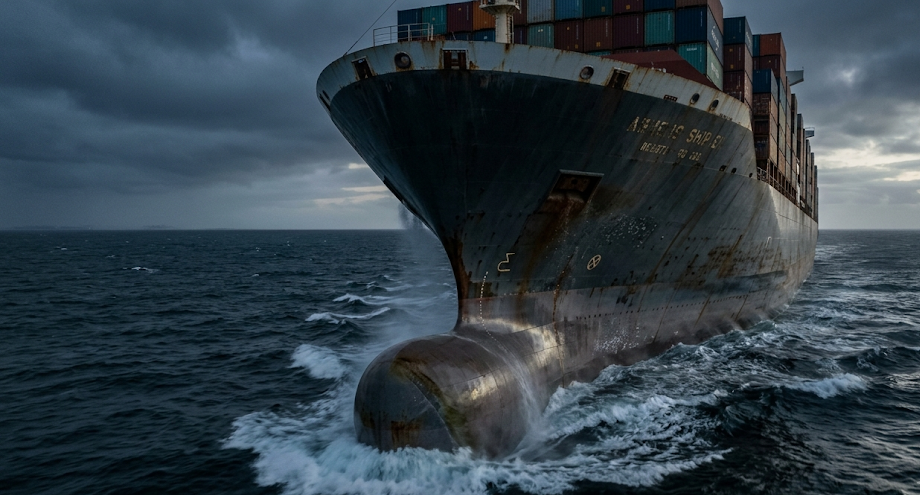
Naval Architecture & Hydrodynamics: Wave-Making Resistance, Froude Numbers & Bulbous Bow Mechanics

In the physical science of naval architecture, a ship moving across the boundary between ocean water and atmosphere is a complex thermodynamic and hydrodynamic system. To propel a 200,000-tonne merchant vessel across the sea, naval architects must minimize Total Hydrodynamic Hull Resistance ($R_T$). Every extra kilowatt of engine power required to overcome hydrodynamic drag burns … Read more

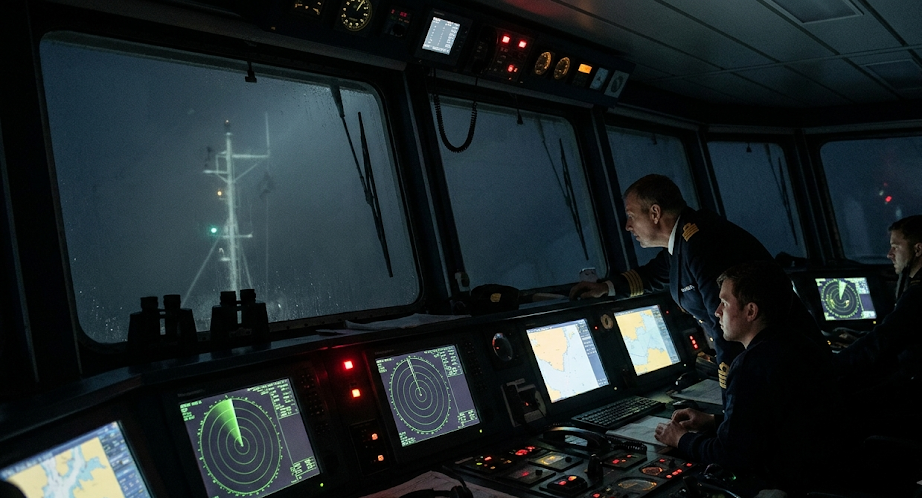
Integrated Bridge Systems (IBS) & Dynamic Positioning (DP): Sensor Fusion & Redundancy

In the modern era of automated naval architecture and offshore marine engineering, the navigation bridge has evolved from an assortment of isolated navigational dials into a unified, cyber-physical command center: the Integrated Bridge System (IBS). Furthermore, for specialized commercial vessels operating in extreme offshore environments—drillships, cable-layers, subsea construction vessels, and shuttle tankers—safety depends upon Dynamic … Read more

Automatic Identification System (AIS): Class-A Transponders, SOTDMA & Satellite Tracking

In the digital architecture of contemporary maritime situational awareness, the Automatic Identification System (AIS) stands as the universal identification and telemetry broadcast network linking over 300,000 commercial vessels worldwide. Mandated under IMO SOLAS Chapter V Regulation 19, AIS continuously broadcasts digital packets of navigational data—ship identity, callsign, MMSI, dimensions, high-precision GNSS position, speed over ground, … Read more

Marine Radar & ARPA Systems: X-Band vs. S-Band Frequencies & Automated Collision Avoidance

In the congested waterways and storm-tossed open oceans of commercial seafaring, the Marine Radar (Radio Detection and Ranging) system equipped with an Automatic Radar Plotting Aid (ARPA) serves as the primary tactical sensor preventing catastrophic ship-to-ship collisions. Operating silently in pitch-black night, dense maritime fog, and blinding tropical rain squalls, marine radar emits microsecond pulses … Read more

Electronic Chart Display & Information Systems (ECDIS): Standards, ENC Vectors & Safety Contours

In the high-stakes realm of modern ocean navigation, the traditional mahogany chart table stacked with hand-corrected paper Admiralty charts has been permanently superseded by the Electronic Chart Display and Information System (ECDIS). Governed by strict International Maritime Organization (IMO) SOLAS Chapter V carriage mandates, ECDIS is not merely a digital map viewer; it is a … Read more

About ShipTech

About ShipTech

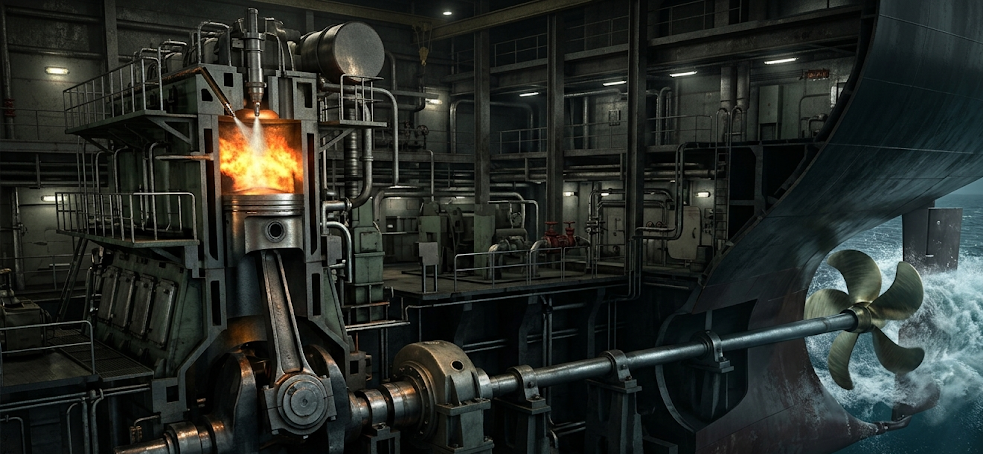
ShipTech is your premier technical reference for modern marine engineering, naval architecture, two-stroke crosshead diesel thermodynamics, and automated maritime navigation systems. We provide marine engineers, naval architects, and maritime professionals with rigorous, industry-tested technical analysis.

Learn More →
Marine Propulsion Crosshead & dual-fuel cycles
ECDIS & Navigation ENC vectors & radar tracking
Naval Architecture Hydrodynamics & hull stability